Games-based learning involves students learning using concepts in games. Students learn through repetition, failure and accomplishing their goals, as they are provided with the opportunity to test different ways to create and complete games (Gee, 2005). Productive failure is a part of games-based learning, as students are allowed to make mistakes. Productive failure is vital to a student’s development as they begin to understand how to persevere and also afford better conceptual understanding and creative thinking (Kapur, 2016).
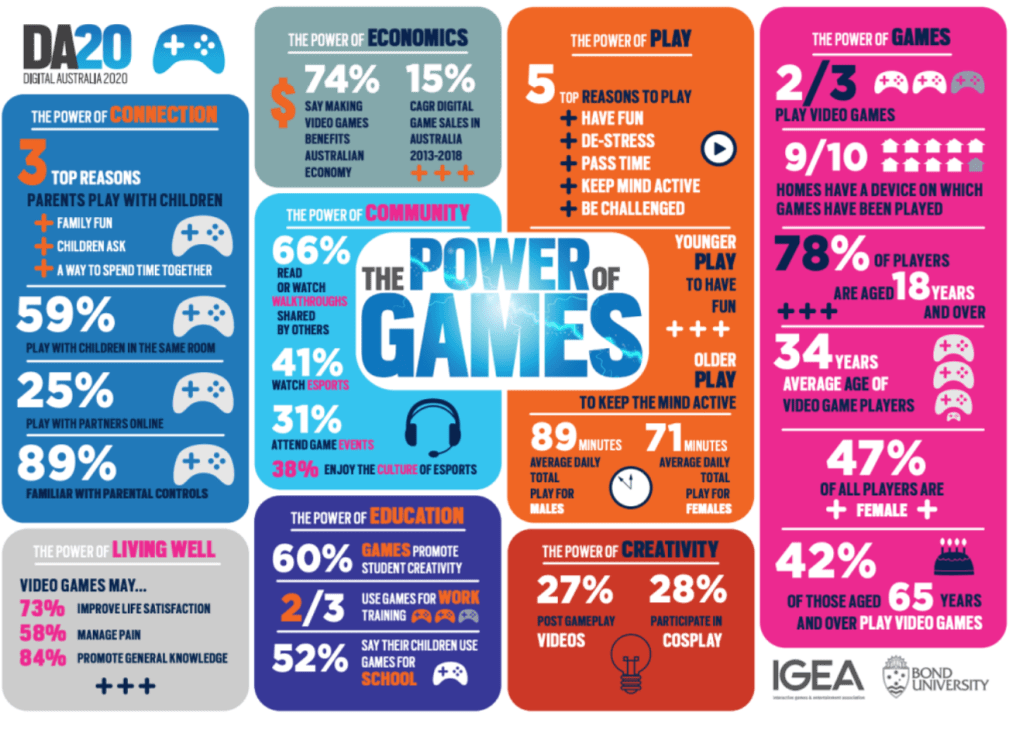
As stated by Perera et al. (2014) gamed-based learning is used to provide an intervention for students struggling to understand material, as it provides an alternative avenue for learning. It is used to enrich students learning by adding text, audio and images into an active environment. It is also used to reinforce the curriculum content. Some curriculum content that can be taught using games-based learning includes all areas of Mathematics, using the game Prodigy, which comprises a story and battle area. One syllabus outcome that could be covered using Prodigy is MAe-2WM.
The use of games is an excellent way to support constructivist pedagogy through students engaging in hands on learning and being active participants, instead of passive listeners. Many types of games e.g. role play, enable learning through problem-solving and enquiry. Open-ended exercises are used as students program the game to be uniquely their own, while also inspiring students to explore different avenues. Using GameMaker by Yoyo games allows students to gain 21st century skills, that include teamwork, as they are working with their peers to design a game, persistence when they encounter parts of the game that do not go as planned, and critical thinking as they develop an understanding of how to create a game (Gee, 2005). Scratch also allows students to learn 21st century skills such as coding and creativity as they are coding what they want to create.
GameMaker allows students to become designers by providing them with a platform to work their creative mind and innovate, while also mastering skills and competencies. Students need to plan, design, test and produce when creating a game (Federoff, 2002). By testing their games, students are able to recognise problems in their games and fix these by coming up with creative solutions. This provides students with a sense of accomplishment as they have created a challenging but not impossible game, while also fostering creativity as they have solved problems, brainstormed and directed and designed their own games (Connolly et al. 2006).
When looking at the affordances of using emerging technologies in the classroom, teacher’s must be able to recognise the issues that may arise. Games-based learning does not always support deeper learning e.g. games created to teach such as Mathletics, may not allow student’s the opportunity to foster creativity and solve problems, as they are simply being passive recipients, or rote learning (Connolly et al. 2006). Therefore, teachers must ensure the process relates to syllabus outcomes and includes assessment, to guarantee students are gaining a deeper understanding of the content.
References
Connolly, T. M., Stansfield, M., & McLellan, E. (2006). Using an Online Games-Based Learning Approach to Teach Database Design Concepts. Electronic Journal of e-learning, 4(1), 103-110.
Gee, J. P. (2005). Good video games and good learning. Phi Kappa Phi Forum, 85(2), 33-37.
Kapur, M. (2016). Examining productive failure, productive success, unproductive failure, and unproductive success in learning. Educational Psychologist, 51(2), 289-299.
Perera, N. T., Wijerathne, I. S., Wijesooriya, M. M., Dharmarathne, A., & Weerasinghe, R. (2014). A game-based learning approach to enrich the special education in Sri Lanka. ICTer, 7(2).
 Hannah's Blog