Constructionism is designed to provide students with the four most important skills to succeed in the 21st century which include “critical thinking, communication, collaboration and creativity” by engaging them in meaningful experiences (Jefferson and Anderson, 2017). Makerspaces promote constructionist learning using physical materials (Stevenson et al, 2019). As stated by Sheridan et al (2014), Makerspaces are “informal sites for different types of creative production in art and science, where people blend digital and physical technologies to explore ideas and learn technical skills”. They are recognised for promoting creativity, critical thinking and problem solving through hands-on design (Stevenson et al, 2019).
Makerspaces are a transformative element in education as they promote authentic, real-world creativity through design e.g. crafting their own circuits, enabling integration of STEM learning in a motivating way (Resnick, 2014). Instructional models such as the IDEO’s Design Thinking for Educators can be used to teach makerspaces. Freeman (2017) notes that design thinking encourages the idea that failure is a vital part of learning, and makerspaces allow for the process of experimentation, as students design and build, making continuous improvements to their prototypes as they learn what works and doesn’t work.
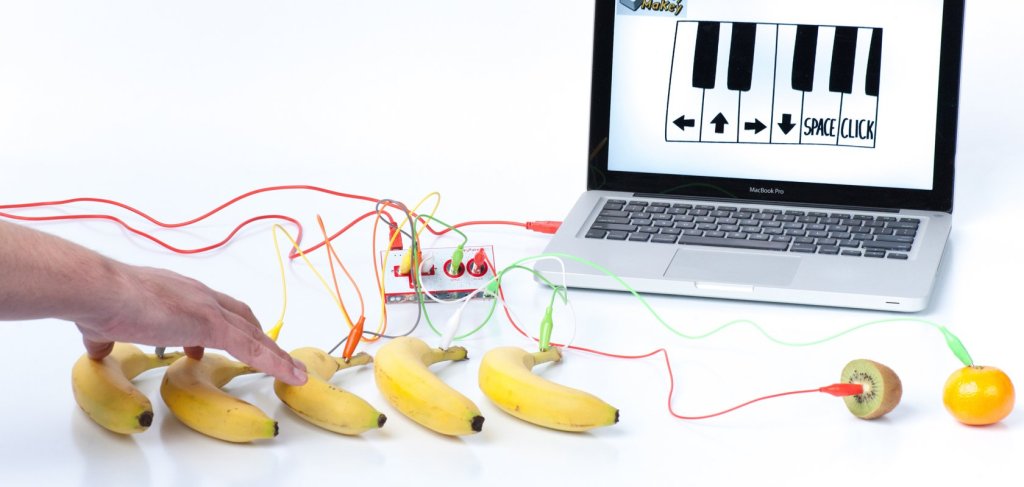
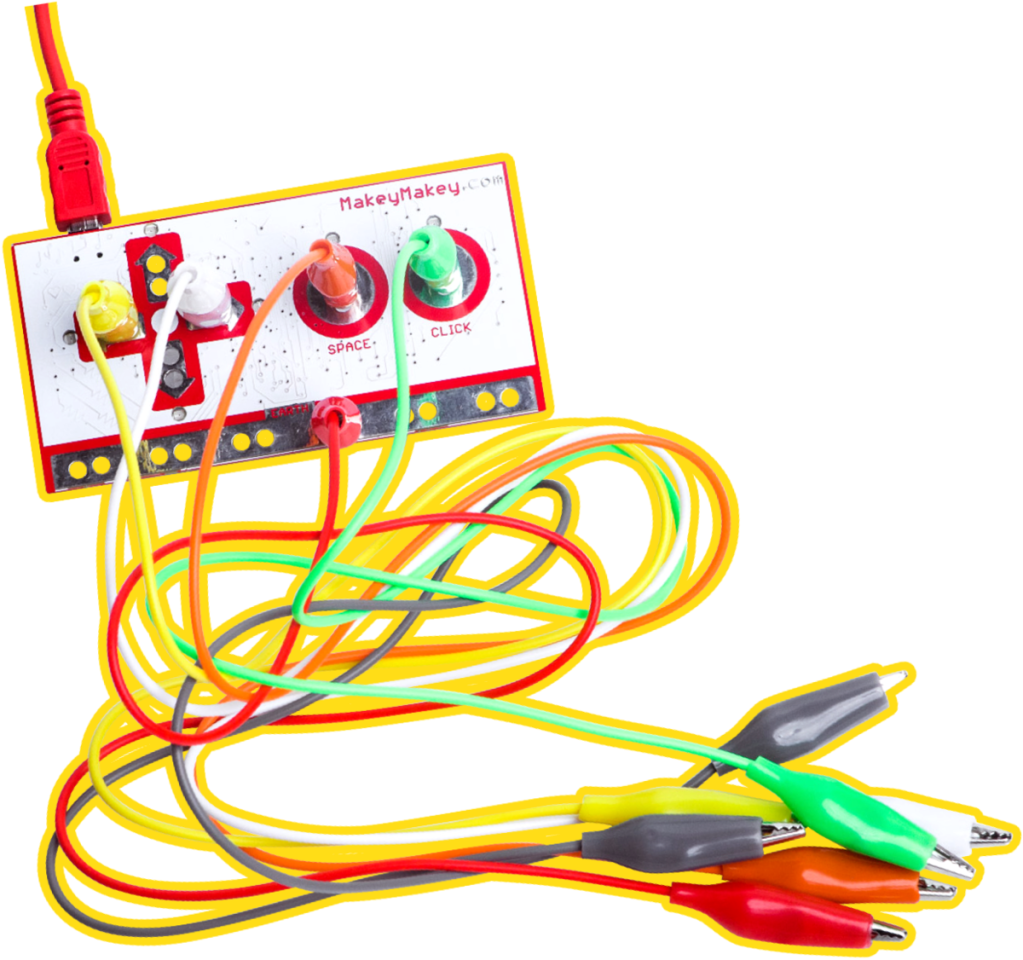
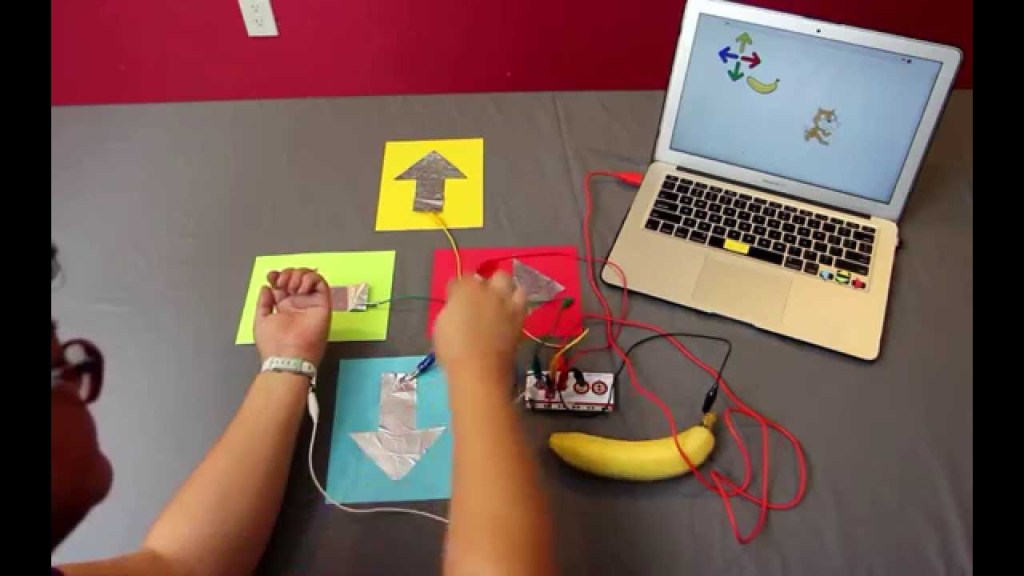
Makey Makey is an example of a Makerspace. It uses a circuit board, which is a piece of hardware featuring a microcontroller, built on a single printed circuit board that encourages critical thinking and reflection. It is best used in a primary classroom and allows students to problem solve in a student-led way. Stevenson et al (2019) states that play is the dominant support for creative thinking, which is developed while participating in construction activities. Garaigordobil and Berrueco (2011) found that structured play positively impacts verbal and visual creativity. By using Makerspaces, in particular Makey Makey, students are learning by doing and have the opportunity to share what they have made with their peers (Rivas, 2014). LittleBits is another example, that is designed for younger students that requires minimum knowledge in electronics and coding to use. Lastly, Circuit Scribe encourages students to participate in hands on learning.
The maker movement allows students to foster creativity by developing innovative solutions to authentic problems, supporting exploration and experimentation. It also links to many KLAs such as Science as students can test how to conduct electricity. Students create a path to conduct electricity, meeting the outcome SC5-11PW (NESA, 2017). Playdough is very conductive, so students can also use Playdough to learn letters with the Makerspaces, e.g. touching an orange for the computer to type O. It can also be used to create a piano! The video below highlights many ways Makey Makey’s can be used including an example of the Piano.
This video portrays many ways a Makey Makey can be used in different inventions to do many things
It is vital that Makerspaces are researched before being used in the classroom, as this area is rapidly evolving. Some issues as states by Stevenson et al (2019) are that it can become difficult to access equipment or gain the skills to teach Makerspaces in the classroom. Teacher’s need to be provided with support through professional experience, programming, training and resources to implement Makerspaces into their classrooms.
References
Garaigordobil, M., & Berrueco, L. (2011). Effects of a play program on creative thinking of preschool children. The Spanish journal of psychology, 14(2), 608-618.
Jefferson, M., & Anderson, M. (2017). Transforming schools: Creativity, critical reflection, communication, collaboration. Bloomsbury Publishing.
NSW education standards authority (NESA). (2017). Science K-6 syllabus.
Rivas, L. (2014). Creating a classroom makerspace. Educational Horizons, 93(1), 25-26.
Sheridan, K., Halverson, E. R., Litts, B., Brahms, L., Jacobs-Priebe, L., & Owens, T. (2014). Learning in the making: A comparative case study of three makerspaces. Harvard Educational Review, 84(4), 505-531.
Stevenson, M., Bower, M., Falloon, G., Forbes, A., & Hatzigianni, M. (2019). By design: Professional learning ecologies to develop primary school teachers’ makerspaces pedagogical capabilities. British Journal of Educational Technology, 50(3), 1260-1274.


Hi Hannah! Those are some great examples of Makey Makey you have found. I was wondering how you would incorporate the technology into your subject area? Also, how do you find this constructivist technology compares to its alternatives discussed in tutorials? Great post!
LikeLike